
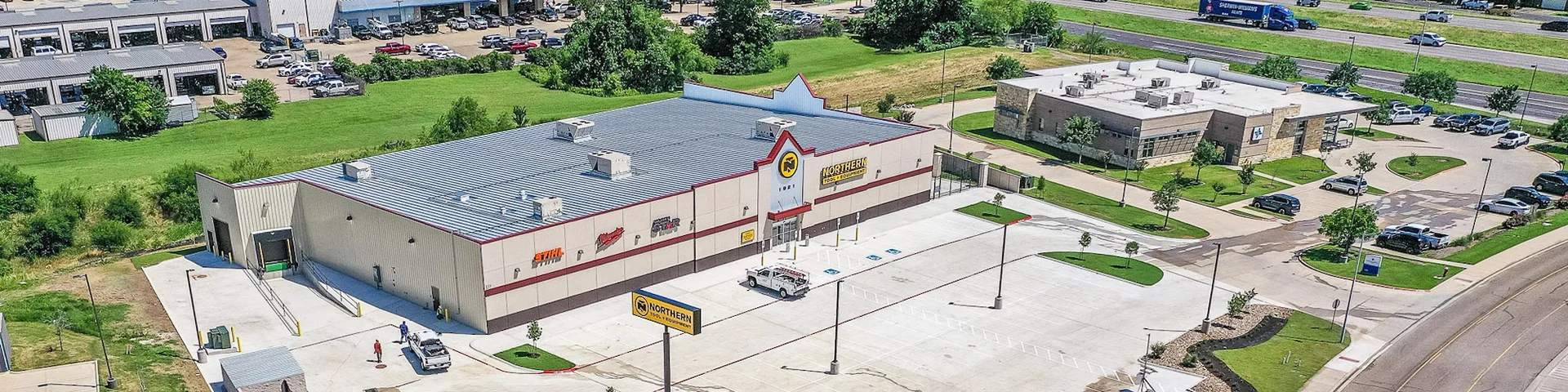
How you structure a commercial project affects its price just as much as the building itself, a point we cover in our guide to commercial construction costs in Dallas-Fort Worth. One of the biggest structural decisions you’ll make is design-build vs. design-bid-build. Both are legitimate ways to deliver a commercial project, but they split the responsibility, the risk, and the schedule in very different ways, and picking the wrong one for your project is one of the more expensive mistakes an owner can make before a single wall goes up.
What Design-Bid-Build Actually Means
Design-bid-build is the traditional model most owners are already familiar with. An architect designs the project under a separate contract, the finished design goes out to competing contractors for bids, and the owner signs a second, separate contract with whichever contractor wins the job. It’s a linear process: design finishes, then bidding happens, then construction starts, each stage waiting on the one before it. That separation can work well for owners who want maximum competition on price and are comfortable managing two different firms with two different contracts, but it also means the contractor had no input while the design was being drawn, and any conflict between what was designed and what can actually be built affordably shows up after the contract is already signed.
What Design-Build Actually Means
Design-build puts the design and construction under a single contract with one team, which is according to the Design-Build Institute of America the fundamental difference between design-build and every other delivery method. The architect and the contractor work from the same set of assumptions from day one instead of handing a finished design across a wall. That means constructability, material costs, and schedule get factored in while the design is still being drawn, not discovered after the fact. DBIA’s research points to design-build projects running about 36% faster during construction and finishing with less cost and schedule growth than design-bid-build, largely because problems get caught and solved during design instead of during construction, when a fix costs far more.
Why This Decision Affects Your Budget More Than People Expect
The delivery method you choose shapes more than paperwork. Under design-bid-build, a design that looks great on paper can come back from bidding well over budget, forcing a redesign that costs both time and money. Under design-build, the team is pricing and refining as the design develops, so a budget conversation happens early enough to actually change the outcome. This is part of why we flagged the delivery method as a real cost driver in our DFW construction cost breakdown: the same building, on the same site, can land at meaningfully different total costs depending on which of these two paths it took to get built.
When Design-Build Makes Sense
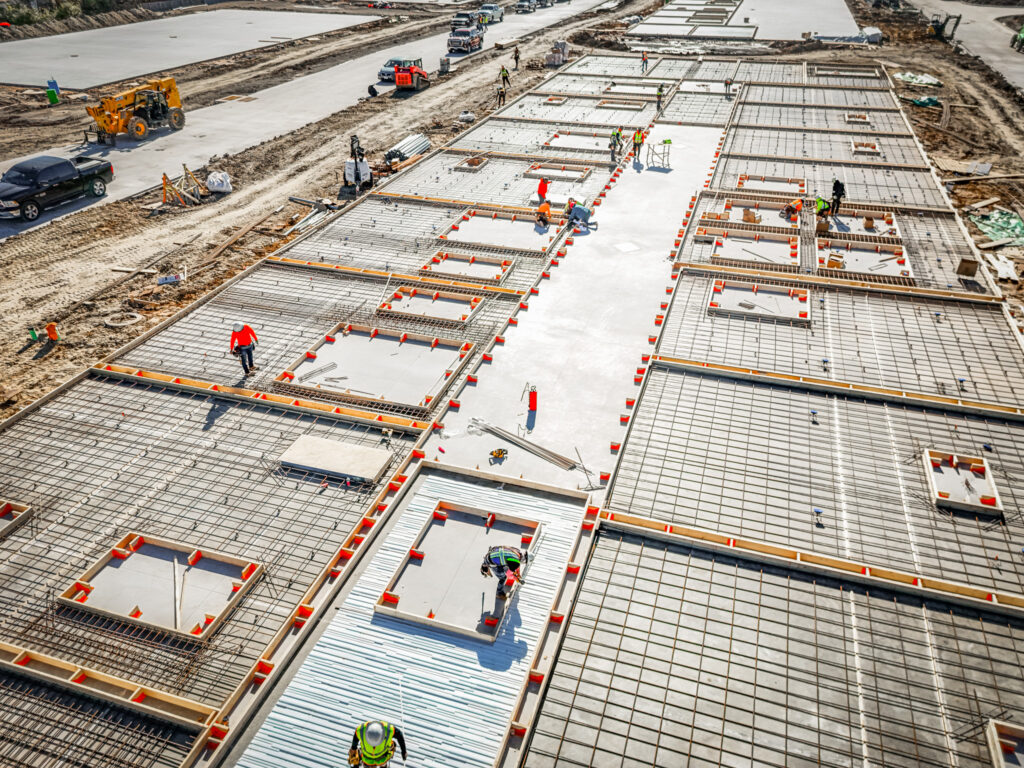
Design-build tends to be the stronger fit when an owner has a firm schedule to hit, wants a single point of accountability instead of managing two separate contracts, or is building something where the design and the construction approach are closely linked, like a tilt-wall building or a self-storage facility where the structural system and the design are basically the same decision. It’s also a good fit for owners who want cost certainty earlier in the process rather than waiting for a competitive bid to find out what a design actually costs.
When Traditional Design-Bid-Build Still Makes Sense
Design-bid-build still has a place, particularly for owners who are required by policy or funding source to competitively bid a fully completed design (common on some public and institutional projects), or for owners who want a completely independent architect with no financial relationship to the builder reviewing the project on their behalf. It can also suit a project where the design is highly specialized or unusual enough that the owner wants design decisions finalized in isolation before any contractor pricing enters the conversation.
How Reliable Commercial Handles Design-Build
We’ve built both ways for decades across Dallas-Fort Worth and North Central Texas, but our design-build projects follow the same three-stage approach we use on everything, just compressed into a single working relationship instead of two separate ones:
- Pre-construction planning
- Construction management
- Post-construction support
That lets us take on everything from big-box retail to industrial warehouses to multi-story self-storage facilities with one team accountable for the outcome from the first sketch to the final walkthrough, rather than passing the project between separate design and construction contracts along the way.
A Simple Way to Frame the Decision
If you’re still weighing the two, it usually comes down to three questions:
- How firm is your timeline? If a delay has real financial consequences, whether that’s a lease start date, a seasonal opening, or financing that’s only locked in for so long, design-build’s overlapping schedule (where early construction can start while later design details are still being finalized) tends to protect that date better than a linear process where each phase waits on the last.
- How much do you want to manage? Design-bid-build means being the point of contact between two firms that don’t answer to each other; design-build means one team and one contract covering the whole outcome.
- How unusual is the project? A highly specialized or unconventional design sometimes benefits from an architect working independently before contractor input enters the picture, which favors the traditional model.
Most commercial projects in our experience, especially straightforward warehouse, retail, and self-storage builds, lean toward design-build simply because the building type and the construction method are so closely linked that separating them adds a step without adding much value.
Talk to Us Before You Choose
The right delivery method depends on your timeline, your budget certainty needs, and the type of building you’re planning, and it’s worth a real conversation before locking in either approach. Reliable Commercial has delivered projects both ways since 1982, and our team can walk you through which one fits your project. Reach out through our contact page or call (817) 467-0779, or see the range of project types we’ve built on our projects page and services page.