
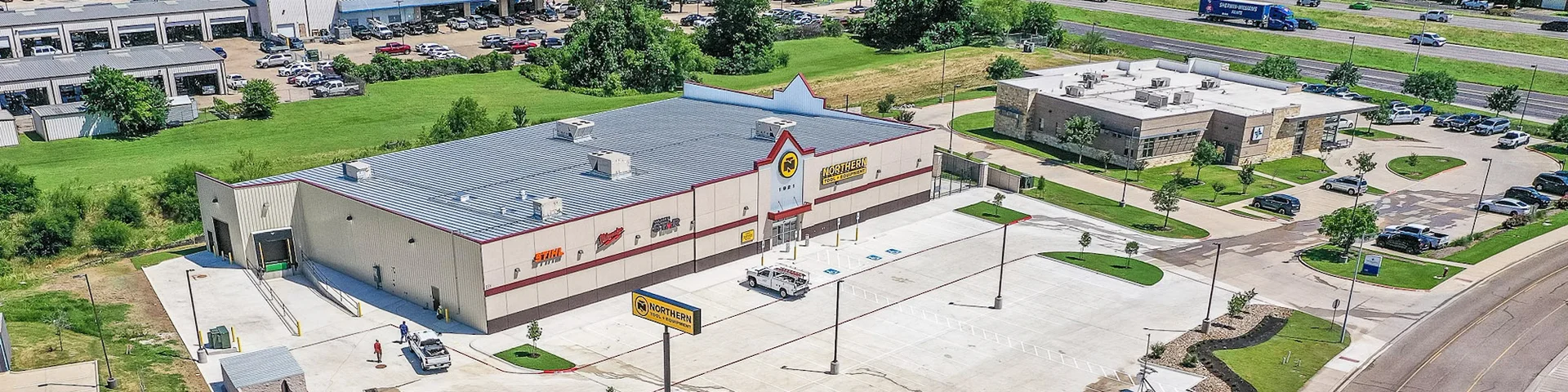
If you are planning a retail center, warehouse, or self-storage facility in North Texas, one of the first questions you will ask is how long the project will take. It is a fair question, because the opening date drives everything from financing to tenant commitments.
The honest answer is that there is no single number. How long commercial construction takes in Texas depends on the type and size of the building, how the project is delivered, how long design and permitting take, and what happens on the site once work begins. This guide walks through each phase of a typical commercial construction timeline, what speeds a schedule up or slows it down, and how to build a timeline you can actually plan around.
The Short Answer: Construction Is Only Part of the Timeline
Many owners focus on the construction phase and underestimate everything that comes before it. A commercial project’s total timeline is the sum of several phases: planning, design, permitting, preconstruction, construction, and closeout. On some projects, the work that happens before anyone breaks ground takes a significant share of the overall schedule. That is why a contractor who quotes a firm duration before seeing your site, your plans, and your permit status is guessing. A realistic schedule is built from your specific project, not from a general rule of thumb.
The Phases of a Commercial Construction Project
Every project is a little different, but most follow the same basic sequence.
- Planning and feasibility. You confirm the site, the budget, zoning, and what the building needs to do. Decisions made here shape every later phase.
- Design and engineering. Architects and engineers develop the plans. The more complete and coordinated the drawings are, the fewer surprises appear later.
- Permitting and plan review. Plans go to the city for review before work can start. Cities set their own requirements, and the City of Dallas, for example, describes its Permitting & Inspections function as ensuring new construction meets applicable city codes and regulations.
- Preconstruction and procurement. The contractor finalizes pricing, lines up subcontractors, and orders materials, including long-lead items that can take time to arrive.
- Site work and foundations. Crews clear and grade the site, handle utilities, and prepare the slab and footings.
- Structure and shell. The building’s frame and walls go up. The method matters here, and we compare it below.
- Building systems and finish-out. Roofing, mechanical, electrical, plumbing, and interior work bring the building to a usable state.
- Inspections and closeout. The building is inspected, punch-list items are completed, and the project is handed over once it is approved for occupancy.
What Speeds Up a Commercial Construction Timeline
Choosing the Right Delivery Method
How you structure the project affects how quickly it moves. In design-build, one team handles both design and construction under a single contract, which lets work overlap instead of happening in sequence. The Design-Build Institute of America says research has consistently shown that design-build leads to faster project delivery, with less cost and schedule growth than other delivery methods. It is not the right fit for every owner, and our guide to design-build vs. design-bid-build explains how each approach splits responsibility and schedule. You can also read DBIA’s overview, What Is Design-Build?, for background.
Choosing the Right Building System
The structural system you choose also shapes the schedule. In tilt-wall construction, concrete panels are cast flat on the building’s floor slab and then lifted into place with a crane. According to The Concrete Network’s overview of tilt-up, panels are typically ready to lift after about a week of curing. Pre-engineered metal buildings, by contrast, are fabricated off site and assembled once the foundation is ready. Neither is always faster, and the right choice depends on the building’s size, use, and appearance. Our comparison of tilt-wall vs. metal buildings covers the trade-offs.
Early Planning and Fast Decisions
Schedules move faster when decisions are made early. Finalizing the design, ordering long-lead materials sooner, and responding quickly to questions from the project team all keep the work flowing. Owner changes made after construction starts are among the easiest ways to add time.
What Slows a Commercial Project Down
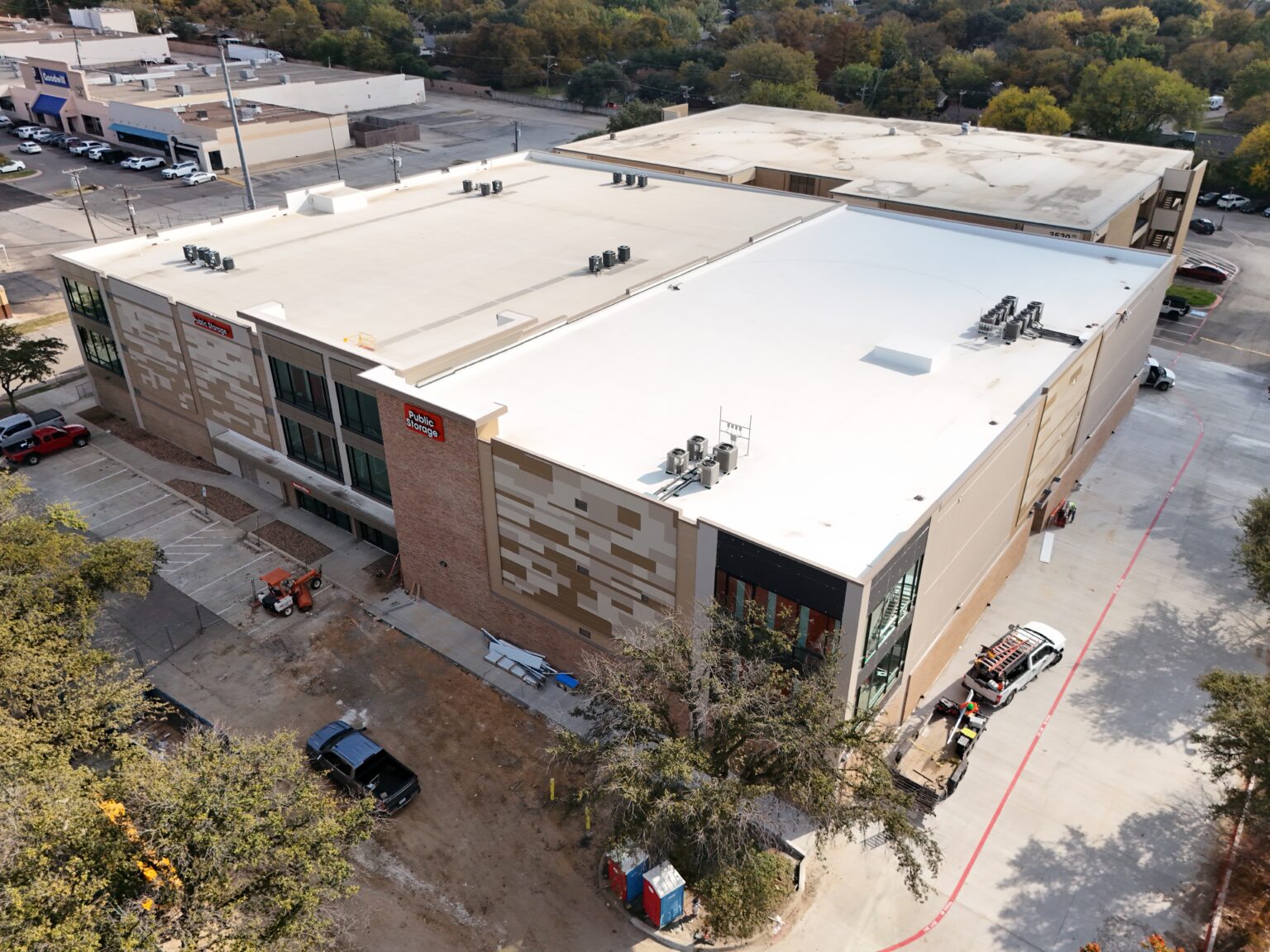
- Permitting and plan review. Fort Worth, Dallas, Arlington, and the surrounding suburbs each have their own requirements, so review times and comments can vary from city to city.
- Weather. Rain, high winds, extreme heat, and freezing temperatures can pause concrete work, crane lifts, and roofing. A good schedule builds in room for weather days.
- Site and soil conditions. Much of the Metroplex sits on expansive clay soil that swells and shrinks with moisture, so foundation and site preparation need careful planning and can add time if conditions are worse than expected.
- Material lead times. Specialty equipment, steel, and other long-lead items can take time to arrive, and a late delivery can hold up the work that follows.
- Incomplete or changing plans. Gaps in the drawings or mid-project changes create rework, and rework creates delays.
- Inspections and coordination. Projects that fail an inspection or have trades waiting on each other lose time that is hard to recover.
How Project Type Changes the Timeline
Different building types move at different speeds, because they involve different amounts of design, systems, and finish work. A simple warehouse shell involves fewer interior systems than a retail building with tenant improvements, and an industrial facility may involve specialized equipment and utilities. Self-storage projects have their own mix of structure and finish-out. Reliable Commercial builds across retail, commercial, industrial, and self-storage projects, and we can walk through how your building type affects the schedule during preconstruction.
How to Build a Realistic Timeline for Your Project
If you are planning a project now, these steps help you get a schedule you can rely on:
- Work backward from your opening date. Know which date is firm and which is flexible before you talk with contractors.
- Ask for a milestone schedule. A good contractor will show you the major phases and when each should start and finish, not just a single completion date.
- Identify long-lead items early. Ask which materials and equipment could affect the schedule, and order them as soon as the design allows.
- Check permit status and city requirements. Find out what your city requires and how review works before you commit to a date.
- Plan for weather and soil. Ask how the schedule accounts for weather days and site conditions.
- Settle design decisions before construction starts. Change orders are one of the most common sources of delay.
Cost and schedule are closely linked, so it helps to review our guide to commercial construction costs in Dallas-Fort Worth alongside your timeline.
How Reliable Commercial Approaches Scheduling
Reliable Commercial is a family-owned general contractor based in Arlington, building retail, commercial, industrial, and self-storage projects across Dallas-Fort Worth and North Central Texas since 1982. According to our services page, we have 19 full crews and more than 200 employees, which helps us keep work moving once a project is underway. During preconstruction, we review your site, plans, and permit status so the schedule reflects real conditions and not assumptions. To see the kinds of buildings we have completed, browse our project gallery.
Frequently Asked Questions
How long does it take to build a commercial building in Texas?
It depends on the building type, size, delivery method, permitting, and site conditions. The construction phase is only one part of the total timeline, which also includes planning, design, permitting, and preconstruction. A contractor can give you a realistic schedule once they have reviewed your site and plans.
How long does commercial permitting take in Texas?
Permitting varies by city and by project. Each city sets its own requirements and review process, so the best way to estimate it is to check with the city where you are building and ask your contractor or design team about current review times.
How long does tilt-wall construction take?
Tilt-wall panels are cast on the floor slab and typically need about a week of curing before they can be lifted, according to The Concrete Network. The total schedule for a tilt-wall building still depends on its size, design, and finish-out.
Does design-build make a project faster?
It can. The Design-Build Institute of America says research has consistently shown that design-build leads to faster project delivery, with less schedule growth. Whether it is right for your project depends on your goals, your team, and how much design is already complete.
What causes delays in commercial construction?
Common causes include permitting and review times, weather, soil and site conditions, material lead times, incomplete or changing plans, and failed inspections. Planning for these up front reduces the chance that any one of them throws off your opening date.
Talk to Us About Your Project Timeline
If you are planning a project in the Dallas-Fort Worth area, we can help you map out a commercial construction timeline that fits your goals. Contact Reliable Commercial or call (817) 467-0779, and our team will walk you through what to expect.